The Motorist’s Guide to Indian Law
An Infographic on The Motor Vehicles Act, 1988
The Foundation of Road Safety
The Motor Vehicles Act, 1988 is the comprehensive legal framework governing all aspects of road transport in India. It’s designed to ensure safety, order, and accountability on our roads. From the moment a driver gets a license to the standards a vehicle must meet, this Act covers it all.
14
Chapters
217
Sections
2
Schedules
The Driver’s Journey: From Learner to Licensed
Section 4 of the Act sets clear age milestones for drivers. The journey to obtaining a permanent license is a structured process designed to build experience and ensure capability.
Age 16
Eligible for a Learner’s Licence for motorcycles up to 50cc, without gears.
Age 18
Eligible for a Learner’s Licence for Light Motor Vehicles (LMV) and a permanent licence for non-transport vehicles.
Age 20
Eligible to obtain a driving licence for transport vehicles, provided they have held an LMV licence for at least one year.
Vehicle Registration: Its Legal Identity
Section 39 mandates that no vehicle can be driven in a public place without being registered. This process gives every vehicle a unique identity and ensures it complies with legal standards.

This chart illustrates the mandatory nature of registration for all vehicles operating in public spaces, a cornerstone of the Act.
Key Traffic Control Measures
Chapter VIII of the Act focuses on traffic control. It empowers authorities to set speed limits and requires drivers to obey all mandatory traffic signs for public safety.
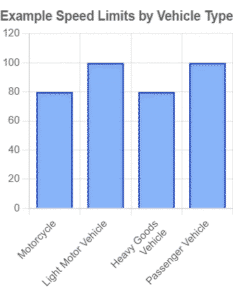
The chart shows example maximum speed limits for different vehicle categories, which can be set by authorities under Section 112.
The Safety Net: Insurance & Liability
The Act provides a crucial financial safety net for accident victims through mandatory third-party insurance and defined compensation structures.
No-Fault Liability Compensation
Under Section 140, compensation is payable without needing to prove fault, ensuring quick relief for victims.
₹50,000
In Case of Death
₹25,000
In Case of Permanent Disablement
Hit & Run Accident Compensation
Section 161 provides for compensation from a special fund when the offending vehicle cannot be identified.
₹25,000
In Case of Death
₹12,500
In Case of Grievous Hurt
When Things Go Wrong: Offences & Penalties
Chapter XIII details the penalties for violating the Act. These are designed to deter dangerous behavior and enforce compliance.
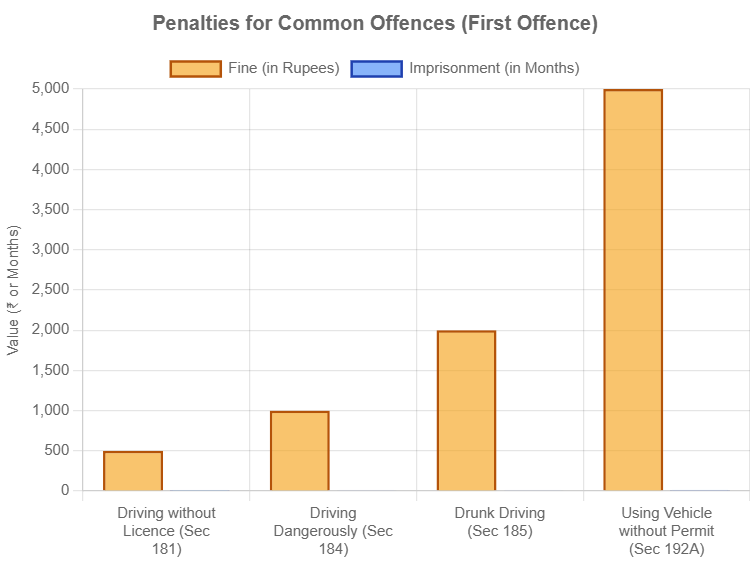
Comparison of penalties for major offenses. Fines and imprisonment serve as deterrents to ensure road discipline.